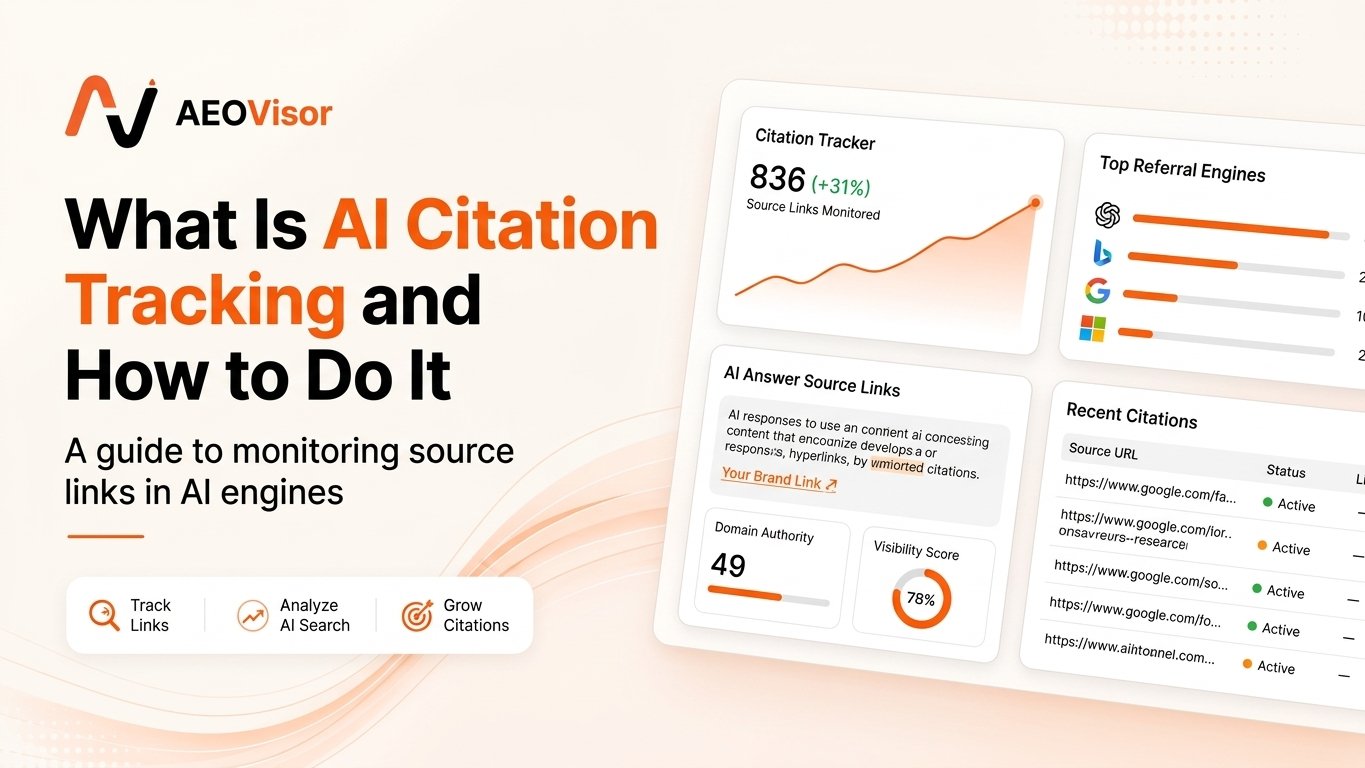
AI citation tracking is the practice of monitoring which URLs and brands AI engines like ChatGPT, Gemini, and Perplexity reference as sources when they answer questions. It tells you whether your content is shaping the answers buyers see before they ever reach your site. If you cannot see who AI trusts in your category, you are flying blind at the exact moment people are forming opinions about your brand.
This guide walks you through what AI citation tracking actually is, how it differs from brand mentions, why it matters, how each engine sources its citations, and the practical ways to measure and improve your citation performance. Let's dig in!
What is AI citation tracking?
AI citation tracking is the process of monitoring when and where AI answer engines cite your website as a source in their generated responses. It captures which specific URLs get referenced for the prompts your buyers ask, across engines like ChatGPT, Perplexity, Gemini, and Google AI Overviews. The goal is simple: know whether the systems people now trust are pulling from your content or your competitor's.
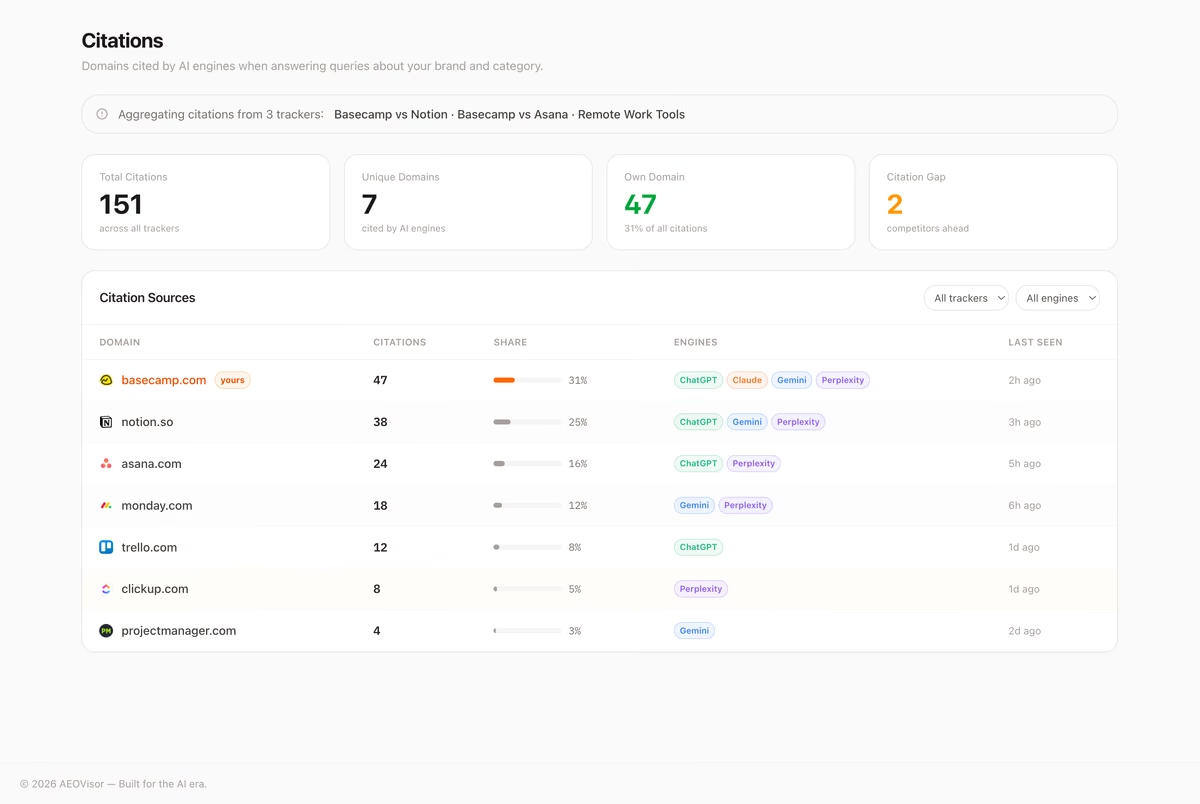
Here is why this matters more than it used to. When someone asks an assistant "what's the best tool for a mid-sized team," the engine builds an answer from a handful of sources, usually three to eight URLs. Those cited pages earn the traffic, the authority, and the model's future trust. Everyone else is invisible. Traditional rank tracking cannot see any of this, because there is no blue-link position involved. The answer either draws from your page or it does not.
AI citation tracking gives you three things a rankings report never could:
- The exact URLs AI engines cite for your priority prompts
- How your citation presence compares to competitors over time
- Which content patterns and formats earn citations in your category
Citations vs. mentions: what's the difference?
A citation happens when an AI engine references your website as a linked source for its answer. A mention happens when the engine names your brand in the response text without linking to you. Both signal visibility, but they measure very different things, so you should track them separately.
Think of it this way. A mention is conversational visibility: the assistant knows your brand exists and includes you in the discussion, maybe as one of several "top providers." A citation is sourced authority: the engine trusted your content enough to build part of its answer from it. Mentions tell you whether you are part of the conversation. Citations tell you whether you are shaping it.
Why you need both metrics
You want a healthy balance because they respond to different work. Mentions grow when your brand becomes a recognized entity through third-party coverage, reviews, and consistent positioning across the web. Citations grow when you publish structured, extractable, source-worthy content that an engine can lift directly into an answer. If you only measure one, you miss half the picture. For a deeper look at the naming side of this, our guide on how to track brand mentions in AI search breaks down the mention half in detail.
How AI engines source citations differently
Each AI engine finds and weighs sources in its own way, so a page cited by Perplexity may be completely absent from ChatGPT. Understanding these differences is why smart citation tracking reports results by engine instead of blending everything into one number. An average hides the engine where you are invisible.
Here is how the major engines behave:
ChatGPT
ChatGPT's search mode leans heavily on Bing's index. If your site is not well indexed in Bing, ChatGPT may skip you even when your content is genuinely excellent. Strong entity signals and solid Bing indexation are the levers that matter most here.
Perplexity
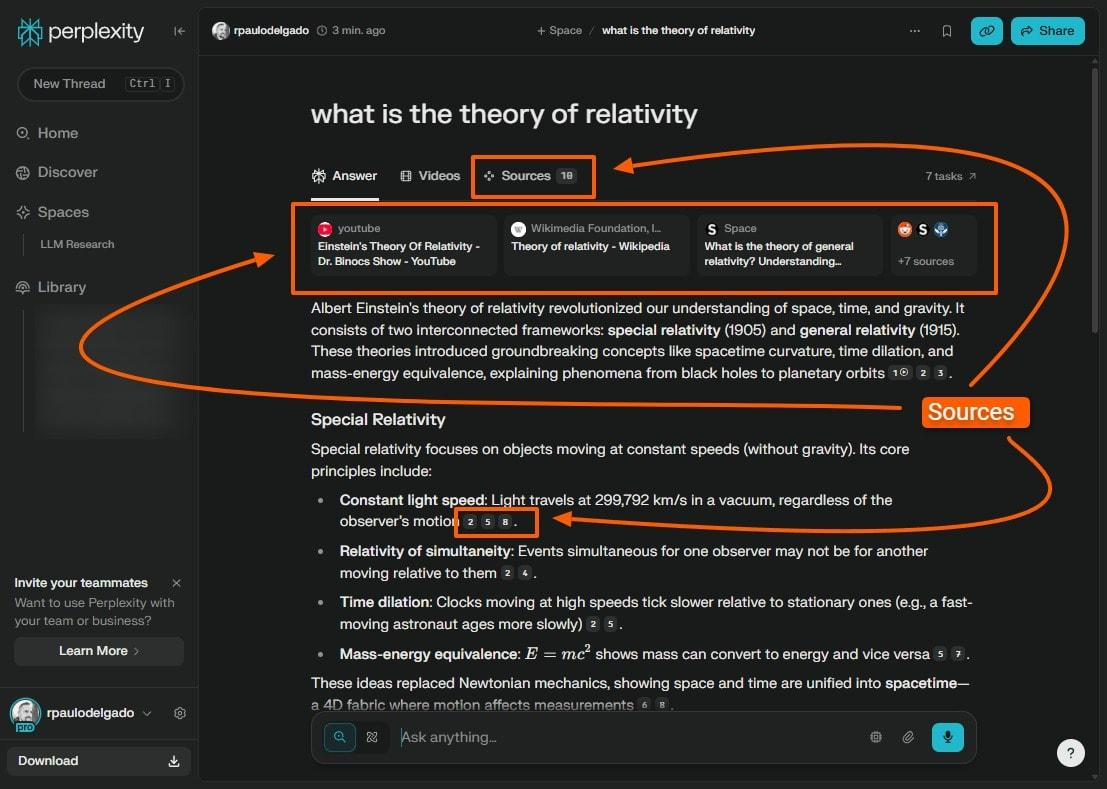
Perplexity runs its own independent crawler and weights freshness heavily. Recent publish dates, clean markdown, clear answers, and inline citations tend to earn the top spots. This is also the engine where citations most directly turn into referral traffic, since Perplexity surfaces its sources prominently.
Gemini and Google AI Overviews
Gemini and Google's AI surfaces draw from Google's core knowledge graph and organic web index. They favor structured data, topical authority, and facts that are corroborated across multiple trusted sources.
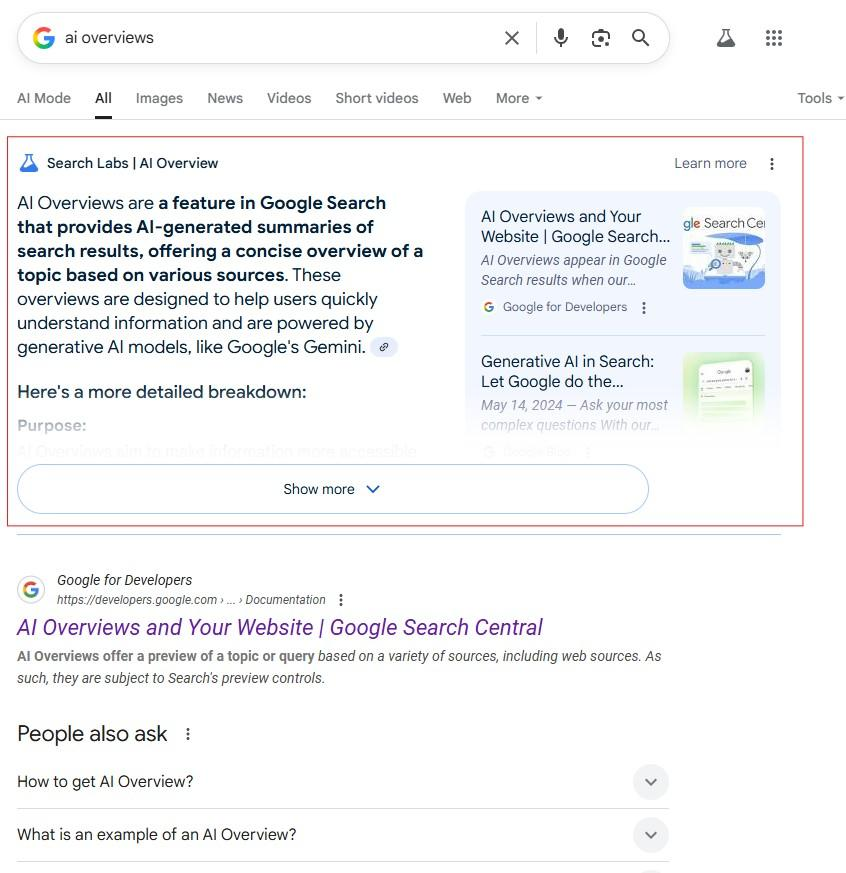
Google's own guidance confirms that pages must be indexed and eligible for a snippet to appear in AI Overviews or AI Mode, and that standard SEO fundamentals still apply. Both surfaces also use a query fan-out technique, issuing several related searches to build one answer, which widens the pool of pages that can get pulled in.
How to track AI citations
You can track AI citations through four practical methods: manual spot checks, URL referral parameters, GA4 referral traffic analysis, and dedicated citation tracking platforms. Each layer gives you a different slice of the picture, and the strongest approach combines them. Manual checks give context, analytics show impact, and a dedicated tool gives you consistent, scalable measurement.
Manual spot checks
Start by asking your priority prompts directly inside ChatGPT, Perplexity, and Google, then note whether you are mentioned, cited, or replaced by a competitor. This is fast and free, and it is great for a first read. The catch: AI answers are personalized and shift from run to run, so two people can see different results for the same prompt. Manual checks work for a quick gut check, but they will never scale to every prompt variation your buyers use.
URL referral parameters
When an AI engine sends a click to your site, it often tags the URL with an identifiable parameter. ChatGPT links frequently include utm_source=chatgpt.com, and clicks from Google AI Overviews often carry a text fragment in the URL that highlights the passage the answer referenced. These parameters confirm a citation drove a real visit, though they only capture citations that produced a click, not every time you were cited.
GA4 referral traffic
Inside Google Analytics 4, head to Reports, then Acquisition, then Traffic Acquisition, and filter by session source or medium to isolate referrals from domains like chatgpt.com and perplexity.ai. Build a comparison segment for AI sources so you can watch engagement rate, conversions, and revenue from that traffic over time. This shows impact rather than raw citation frequency, so treat it as a signal that your citation footprint is growing, not a full count. Google Search Console also folds AI Overviews and AI Mode into your overall Web search performance, which helps you cross-check trends.
Dedicated citation tracking platforms
Manual checks and analytics give you partial visibility. A purpose-built platform runs your priority prompts across engines on a schedule, parses each response for linked citations, and benchmarks your citation share against competitors. This is the only method that captures impression-level presence, meaning it counts the times you were cited even when the searcher never clicked through. That matters because a large share of AI answers never produce a click at all.
Which metrics matter for citation tracking
The metrics worth watching are citation rate, mention rate, share of voice, and answer prominence, each measured per engine. Together they tell you not just whether you show up, but how prominently and how you compare to rivals. Tracking them as separate numbers keeps you honest about where the real gaps are.
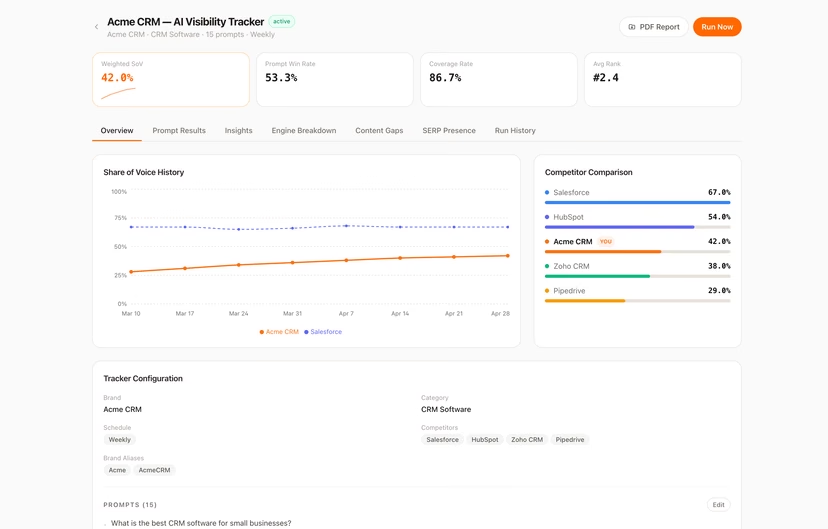
Here is what each one measures:
- Citation rate: the percentage of your tracked prompts where an engine cites your content as a source. This is your clearest signal of content influence.
- Mention rate by engine: how often your brand is named in answers, broken out per engine so an average never hides a weak spot.
- Share of voice: your citation and mention presence compared to competitors for the same prompts, so you know who owns your category conversations.
- Answer prominence: where you appear in an answer. Being the recommendation is not the same as being listed fifth.
A quick tip: because AI answers vary between runs, trend these metrics over repeated scans rather than reacting to any single snapshot. One-off checks mislead. Patterns that recur are what you should act on. If you want a single defensible number to report upward, an AI Visibility Score rolls these signals into one measure you can put in a board deck, with the raw AI answers attached as evidence.
How to improve your AI citation performance
To earn more citations, make your pages easy to extract, structurally clear, topically authoritative, and well supported by off-site signals. AI engines cite content they can lift directly into an answer and trust as a source. The work splits neatly into on-page structure and off-page authority.
Structure content for extraction
Give engines quotable, self-contained answers. Open sections with a direct answer, use descriptive headings that mirror how people phrase questions, and break information into short paragraphs, bullets, and tables. Add original data, clear definitions, and specific evidence an engine can pull without guessing. Machine-readable provenance like statistics and clear sourcing makes a page far easier to cite.
Add structured data
Implement relevant schema (Article, FAQ, HowTo) and make sure it matches the visible text on the page. Structured data helps engines, especially Gemini and Google's surfaces, understand what your page covers and trust it as a corroborated source. Keep pages crawlable too, since a page that AI crawlers cannot fetch will never be cited no matter how good it is. You can check how AI crawlers read your pages using AEOVisor's AI Crawl Simulator.
Build topical authority
Engines tend to cite brands that show depth across a topic, not a single strong article. Build interconnected content clusters around your core themes, link them internally, keep terminology consistent, and refresh older pages so they stay current. Freshness matters a lot for engines like Perplexity.
Strengthen off-site signals
Much of AI brand discovery runs through third-party sources, so earn mentions in reputable industry publications, listicles, and reviews. Publish original research others reference, and keep your brand positioning consistent everywhere it appears. These signals train models to associate your brand with your category and increase the odds you get surfaced. For teams building this into a reporting workflow, our resource for SEO and AEO teams shows how to tie this work to metrics leadership will accept.
Tools for tracking AI citations
The right tool depends on your team's goals, but a dedicated AI citation tracking platform gives you the consistent, scalable measurement that manual checks and analytics cannot. Look for multi-engine coverage, per-engine breakdowns, competitor benchmarking, and URL-level citation data. Bonus points if it grounds your prompts against real search demand rather than invented questions.
This is where AEOVisor's Citation Intelligence fits. It captures citation data automatically during every brand tracker scan, so there is no separate setup: you run your tracker and the citation data flows in. You get URL-level citation data for every prompt you track, broken down by engine, plus the domain authority of cited sources versus your own, content pattern analysis showing what actually gets cited, and competitor citation share so you can see who beats you most often. Because it breaks results down by engine, you can see exactly why ChatGPT, Perplexity, and Gemini each cite different sources for the same question. Citation Intelligence is included in the Growth and Agency plans.
When you are choosing, match the tool to the job you own. If you only need a quick read, manual checks work. If you are accountable for growing citation share over time and reporting it to leadership, pick a platform that measures consistently, separates mentions from citations, and shows you which content to create next.
Frequently asked questions
What is AI citation tracking in simple terms?
AI citation tracking is monitoring which websites AI engines cite as sources when they answer questions in your category. It shows you whether your content is being used to build AI answers, or whether a competitor's is winning that spot. In short, it is how you measure your influence inside AI search.
How is a citation different from a mention in AI answers?
A citation is when an engine links to your page as a source, while a mention is when it names your brand in the text without a link. Citations signal that your content shaped the answer, and mentions signal that your brand is part of the conversation. Track both, because they measure different outcomes and respond to different work.
Can I track AI citations for free?
Yes, you can start for free with manual checks in ChatGPT, Perplexity, and Google, plus GA4 to watch referral traffic from AI domains. These methods give you directional insight but do not scale or count citations you did not get a click from. For consistent, prompt-level tracking across engines, a dedicated platform is the reliable path, and some offer free plans to get started.
Which AI engines should I track for citations?
Track the engines your buyers actually use, which for most B2B teams means ChatGPT, Perplexity, Gemini, and Google AI Overviews. Each sources citations differently, so a page cited by one may be missing from another. Reporting per engine, rather than as a single blended number, is the only way to spot where you are invisible.
How often should I check my AI citation performance?
Review your citation data at least monthly, since models update, competitors publish, and citation patterns shift quickly. Because AI answers vary between runs, trend your metrics over repeated scans instead of reacting to a single check. A steady cadence helps you catch displacement and new opportunities before they affect pipeline.
Ready to see which sources AI trusts more than yours? Set up a tracker and explore your citation data with AEOVisor's Citation Intelligence to find out exactly which URLs ChatGPT, Gemini, and Perplexity cite for your buyers' questions, and what to publish to take those spots.