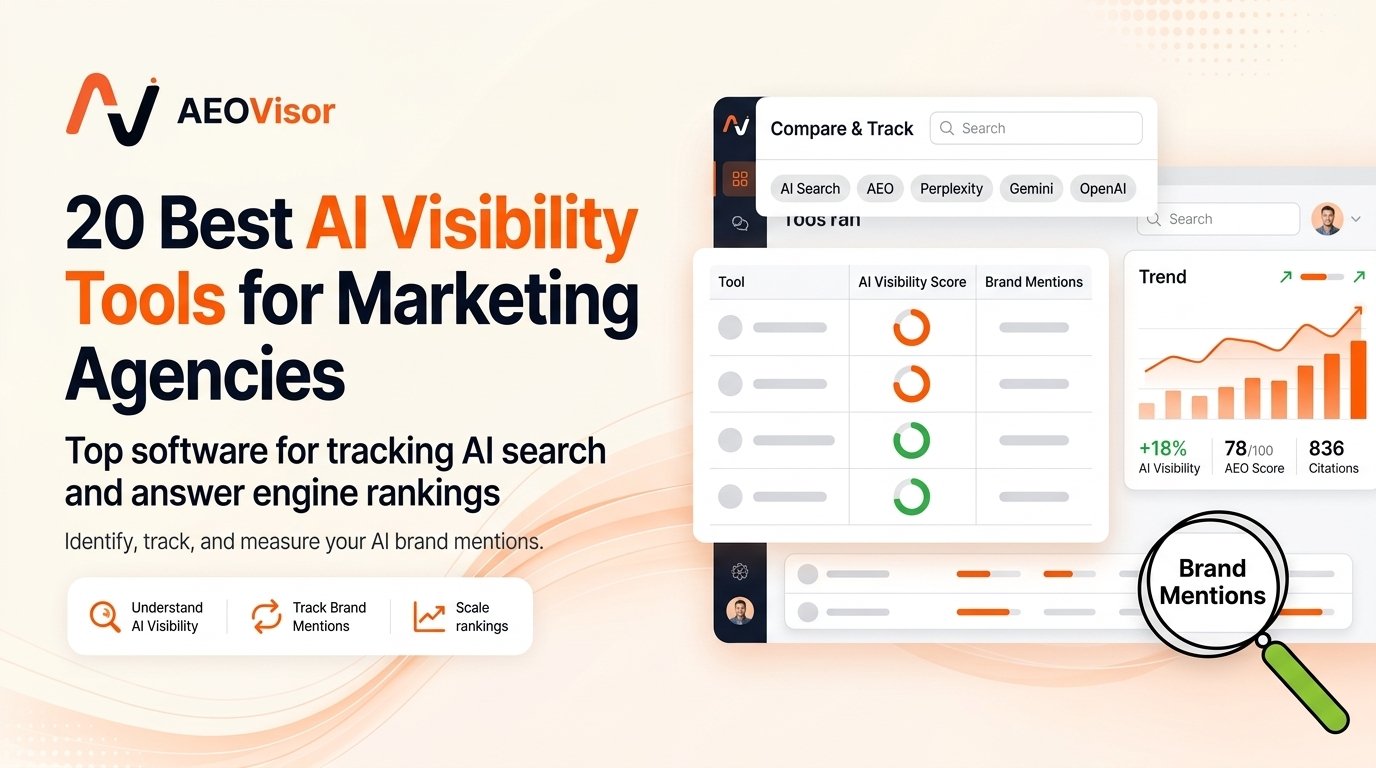
Running Answer Engine Optimization (AEO) across a roster of clients bears almost no resemblance to running it for one brand. You're auditing a prospect at 11pm before tomorrow's pitch. You're translating "share of voice" into terms a CMO can take to their board. Everything eventually has to justify a retainer. With that in mind, this guide breaks down the criteria that actually separate these AI visibility tools — coverage, data integrity, reporting, and pricing — and scores each platform against them.
What to Look for in an AI Visibility Tool for Agencies
A tool built for agencies needs to handle multiple brands cleanly, cover enough engines to avoid blind spots, show its data sourcing honestly, and produce reports a client can read without you translating it for them. Here's what to check before you sign anything:
- Multi-brand management — Separate workspaces per client, plus a portfolio-level view, so you can spot which account is slipping without logging in and out all day.
- Engine coverage — ChatGPT, Gemini, and Perplexity are table stakes. Claude and DeepSeek add real depth. A brand can be dominant in one engine and invisible in another, so single-engine tracking will give you false confidence.
- Data quality — Some platforms genuinely query answer engines in real time. Others infer demand from an SEO keyword database and present it as prompt data. That distinction determines whether you're advising clients based on what people actually ask AI, or an approximation of it.
- Citation tracking — A mention and a citation aren't the same thing. A mention is just AI saying the brand's name; a citation means AI pulled from the brand's content as a source. Citation-level data tells you exactly which URLs you're competing against.
- White-label reporting — Clients pay for something they can forward up the chain. A branded PDF report is what turns a dashboard screenshot into a recurring line item on the invoice.
- Agency pricing structure — Flat pricing beats per-seat or per-brand fees for most agencies. Some vendors sweeten this further with referral programs or partner directories.
If you're just standing up an AEO practice, lead with flat pricing and white-label reporting — you can layer in deeper attribution later once the retainer is proven out.
The 20 Best AI Visibility Tools for Marketing Agencies
For a quick glance at how all 20 platforms compare, check out the table below. AEOVisor leads for agencies that want flat, affordable pricing with white-label reports and multi-brand tracking built in from day one. Most enterprise alternatives cost significantly more and were not designed around the agency workflow.
| Tool | Best for | Where it wins | Where it falls short | Standout for agencies |
| AEOVisor | Agencies wanting flat pricing, white-label reports, and 6-engine coverage | $79/mo flat for 10 brands, white-label PDF reports, citation intelligence, and multi-brand workspaces — no per-seat fees | Not built for enterprise SSO or contractual SLAs | Full agency loop: track, cite, fix, and report under your brand — all in one plan |
| Profound | Large agencies with enterprise clients | Deep attribution, content workflows, and crawler-to-conversion tracking | High entry cost, overkill for lean teams | Agency Mode with client workspaces and pitch environments |
| OtterlyAI | Solo marketers and small agencies | Fast setup, GEO recommendations, and content briefs | No real prompt-volume data, no in-platform content generation | Partner program with workspace management and a directory |
| Scrunch | Agencies that want strong referral economics | Agent Experience Platform serves AI-optimized pages to crawlers | No content generation yet, prompt data is configured not real | Referral commission, prospecting licenses, co-marketing funds |
| AthenaHQ | Agencies whose growth runs on referrals | Action Center turns data into prescriptive fixes | Undisclosed estimation model, credit-based tracking limits | Partner program refers qualified leads by focus area |
| Rankability | Agencies bundling SEO and AI visibility | One workflow spanning SEO, AI visibility, content, and reporting | AI visibility is keyword-configured, not real prompt demand | Purpose-built for agencies, client reporting included |
| Peec AI | Agencies wanting a clean client dashboard | Daily tracking, screenshot audit trails, client-friendly interface | Monitoring only, no content generation | Built for marketing teams and agencies |
| Semrush AI Toolkit | Agencies already running SEO inside Semrush | AI metrics beside the SEO suite you already use daily | Narrower engine coverage, no AEO content workflows | Convenient add-on for existing Semrush users |
| Ahrefs Brand Radar | Agencies bridging SEO and early AI visibility | Familiar SEO environment with AI monitoring added | Prompts are keyword-derived, most engines refresh monthly | Brand Radar inside a trusted SEO tool |
| AirOps | Agencies with technical staff scaling content | Grid runs workflows across hundreds of client URLs at once | Steep learning curve, narrow engine coverage, output needs editing | Grid and Power Agents for high-volume content workflows |
| Writesonic | Agencies focused on content volume | Fast, high-volume AI content production across many accounts | Content is SEO-based with AEO bolted on, no monitoring loop | Fast production across many accounts |
| Conductor | Enterprise agencies already on Conductor | Extends an enterprise SEO platform with 160+ country coverage | Prompts are synthetic and keyword-derived, updates twice a week | Enterprise SEO heritage with an AI layer |
| BrightEdge | Agencies serving entity-heavy enterprises | Deep entity and knowledge-graph strength for citable content | Prompt suggestions come from SEO data, limited engine coverage | Entity and knowledge graph strength |
| Bluefish | Agencies focused on brand safety | Brand-safety and reputation monitoring across AI channels | No content generation, no real prompt-volume data | Reputation and brand-safety monitoring |
| Evertune | Agencies tracking brand accuracy for clients | Brand-accuracy monitoring backed by a large consumer panel | Topic-level clustering instead of prompt-level demand | Brand-accuracy and misinformation monitoring |
| Adobe LLM Optimizer | Agencies whose clients run on Adobe | Consolidates AI visibility inside an existing Adobe stack | Prompt data modeled from clickstream, limited content options | Sits inside an existing Adobe stack |
| SE Visible | Budget-conscious agencies wanting SEO + AEO | Multi-brand support on every tier at a low entry price | Newest product, coverage still expanding, no content workflows | Low entry point in the SE Ranking ecosystem |
| AIclicks | Agencies wanting done-for-you content at scale | 10+ engines tracked through real user interfaces, daily updates | Vendor also runs a competing agency service, lighter analytics | Partner directory and recurring revenue share |
| Brandlight | Enterprise agencies mapping who shapes AI answers | Source attribution pinpoints which publishers influence AI answers | Newest platform here, enterprise-oriented rather than agency-first | Source attribution that maps who shapes AI answers |
| Nightwatch | Agencies wanting AI visibility next to rank tracking | AI visibility folded into granular rank-tracking workflows | Lighter AEO depth and citation analysis than purpose-built tools | AI visibility alongside detailed keyword rank data |
Pricing note: AEOVisor's Agency plan is $79 a month flat, covering 10 brand trackers, 6 AI engines, white-label PDF reports, full citation intelligence, and API access with no per-seat or per-brand fees. Enterprise platforms in this list, including Profound, Conductor, and BrightEdge, are priced for large procurement budgets and do not publish standard rates. For agencies launching or scaling an AEO service line, the cost difference is significant.
The tools below range from purpose-built AEO platforms to SEO suites with AI add-ons. We start with AEOVisor, then cover 19 more so you can match a tool to your budget, client base, and workflow. Each entry notes where it fits and where it falls short.
1. AEOVisor
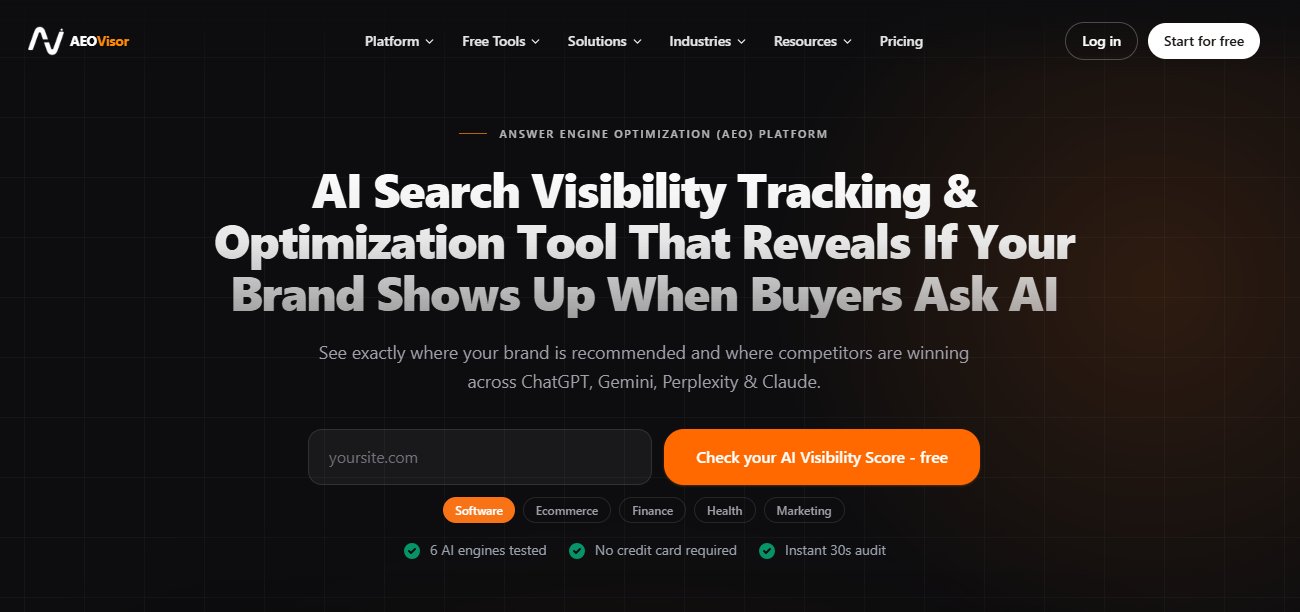
AEOVisor is an AEO-native platform built to help agencies track, report, and improve client visibility across AI answer engines without enterprise contracts. The Agency plan runs $79 a month flat, with no per-seat or per-brand fees, which makes it one of the easiest ways to launch an AEO service line.
The Agency plan includes 10 brand trackers across 6 AI engines: ChatGPT, Gemini, Perplexity, Claude, DeepSeek, and AEOVisor AI. You get multi-brand workspaces, a portfolio dashboard, white-label PDF reports with your logo and colors, full citation intelligence, and API access. There is also a free plan, so you can test the workflow before you pay anything.
What agencies like most is the full loop from measurement to fix. The AI brand monitor tracks weekly Share of Voice, the citation intelligence shows which URLs get cited instead of your client, and the Action Center turns that data into a ranked list of fixes. Every score traces back to the AI answer that produced it, so you can show clients the evidence, not just a number. See the full breakdown on the agency plan page.
Best for: agencies that want flat pricing, white-label reports, and an evidence-backed workflow.
Where it falls short: it is not an enterprise procurement tool, so if you need SSO, SAML, or contractual SLAs, it is not built for that.
Profound
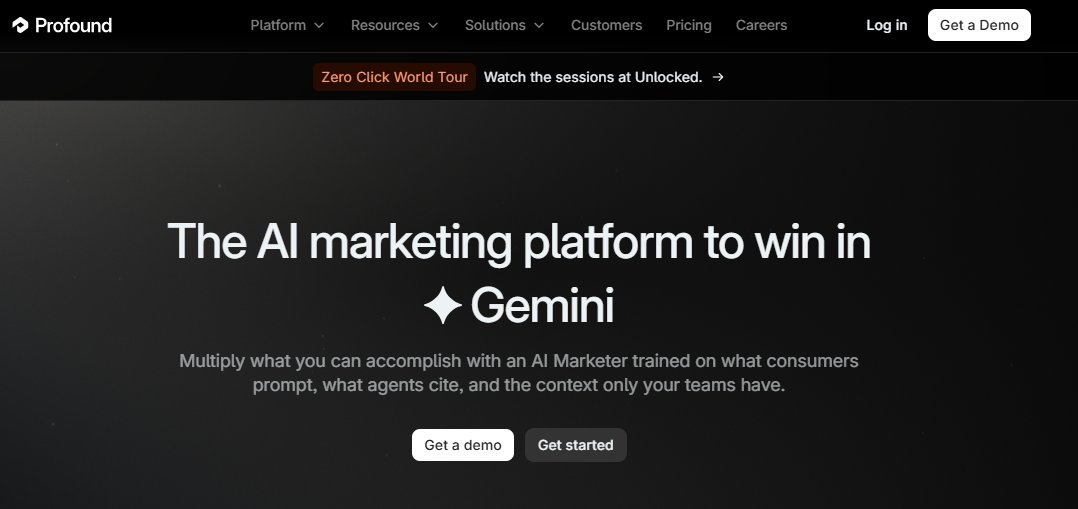
Profound targets agencies running AI visibility as a scaled, formal service. It covers the major answer engines, offers client workspaces and pitch environments, and includes crawler analytics that connect AI bot activity back to actual site traffic.
The appeal is depth — content workflows, competitor tracking, and attribution all live in one platform. The cost of that depth is price and complexity: published pricing sits well above most self-serve tools, so it suits agencies with enterprise budgets more than lean teams.
Good fit for: large agencies serving enterprise clients with formal procurement.
Worth knowing: overkill, and pricey, for teams that just need solid tracking and reporting.
- OtterlyAI
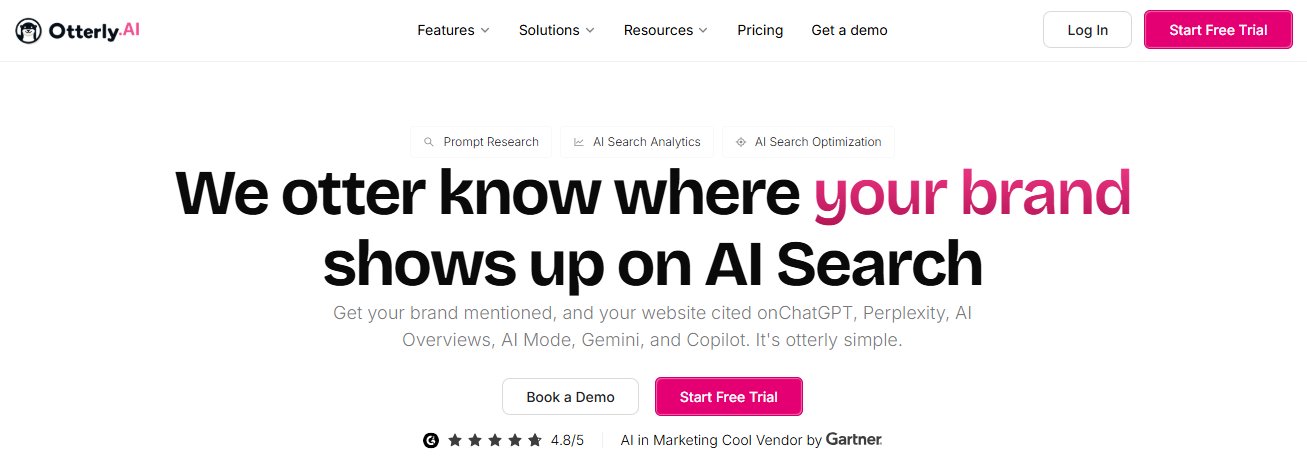
OtterlyAI is a straightforward AI search monitoring tool that's found an audience with solo marketers and small agencies. It covers ChatGPT, Perplexity, Google AI Overviews, Copilot, Gemini, Claude, and AI Mode, and pairs monitoring with GEO recommendations and content briefs.
Setup is quick, and a Looker Studio connector on higher tiers folds AI data into existing client dashboards. The tradeoff is that prompt prioritization is judgment-based rather than backed by real prompt-volume data, and there's no content generation built in.
Good fit for: consultants and small agencies who want a fast setup and plain-language guidance.
Worth knowing: no genuine prompt-demand data, so prioritization comes down to intuition.
- Scrunch
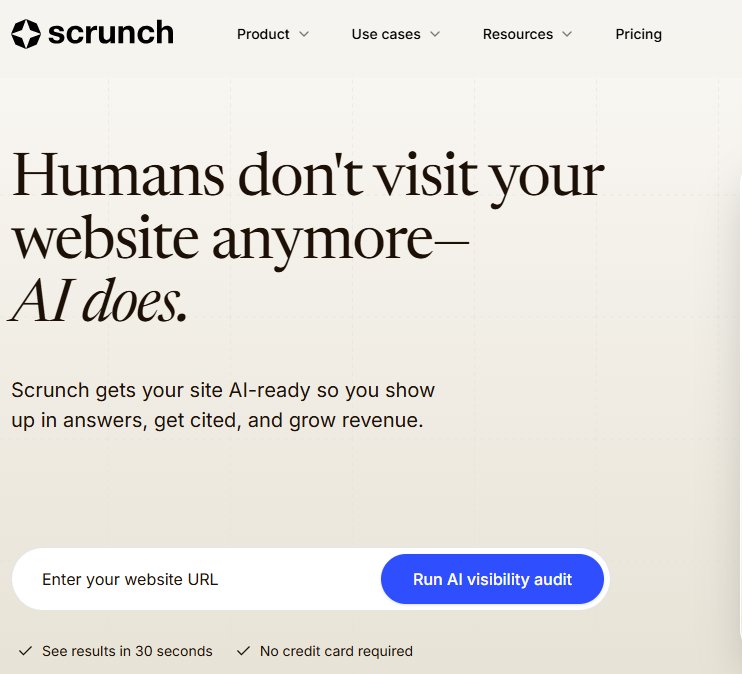
Scrunch approaches AI visibility from the agent-experience angle, monitoring brand presence across answer engines and serving AI-optimized page versions to crawlers without changing what humans see. Its agency partner program includes referral commission, prospecting licenses, and co-marketing support.
The catch is data depth and execution. Its trends data sits at the topic level rather than the individual prompt, and content generation is not part of the toolkit yet.
Best for: agencies that want strong referral economics and clean reporting.
Where it falls short: acting on insights means executing elsewhere.
- AthenaHQ
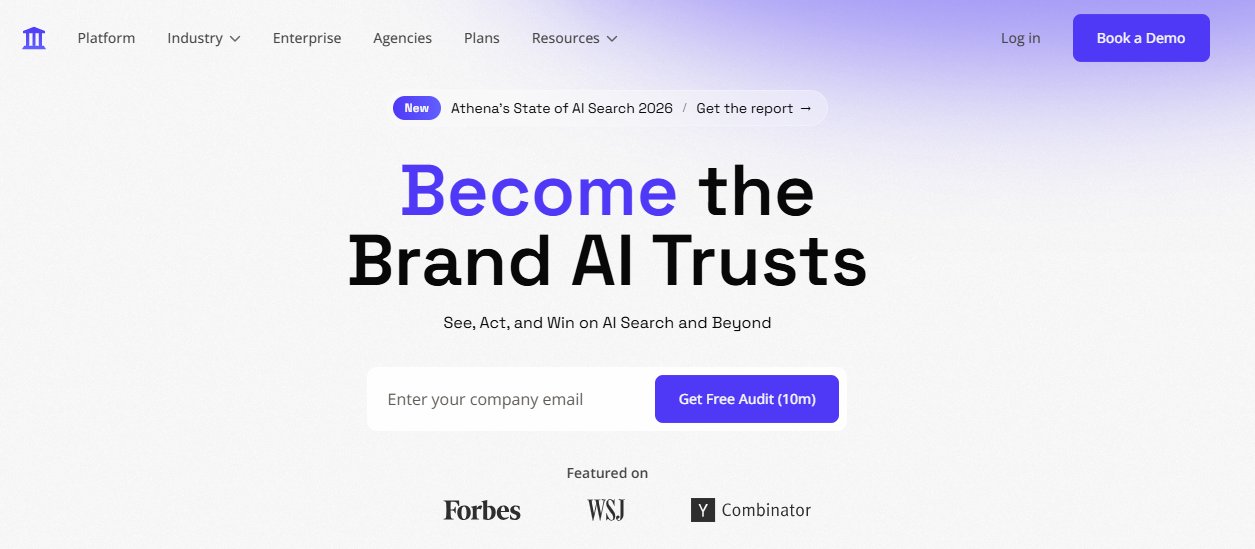
AthenaHQ tracks AI visibility across several engines and pushes prescriptive fixes through its Action Center. Its standout agency feature is inbound lead referral — qualified prospects get routed to partners based on focus area — alongside client workspaces and pitch environments.
Prompt volume comes from a proprietary estimation model that isn't fully disclosed, and tracking is metered on credits tied to your plan, so review AI-generated output before it reaches a client.
Good fit for: agencies whose growth depends on referrals.
Worth knowing: an undisclosed estimation model and credit-based limits.
- Rankability
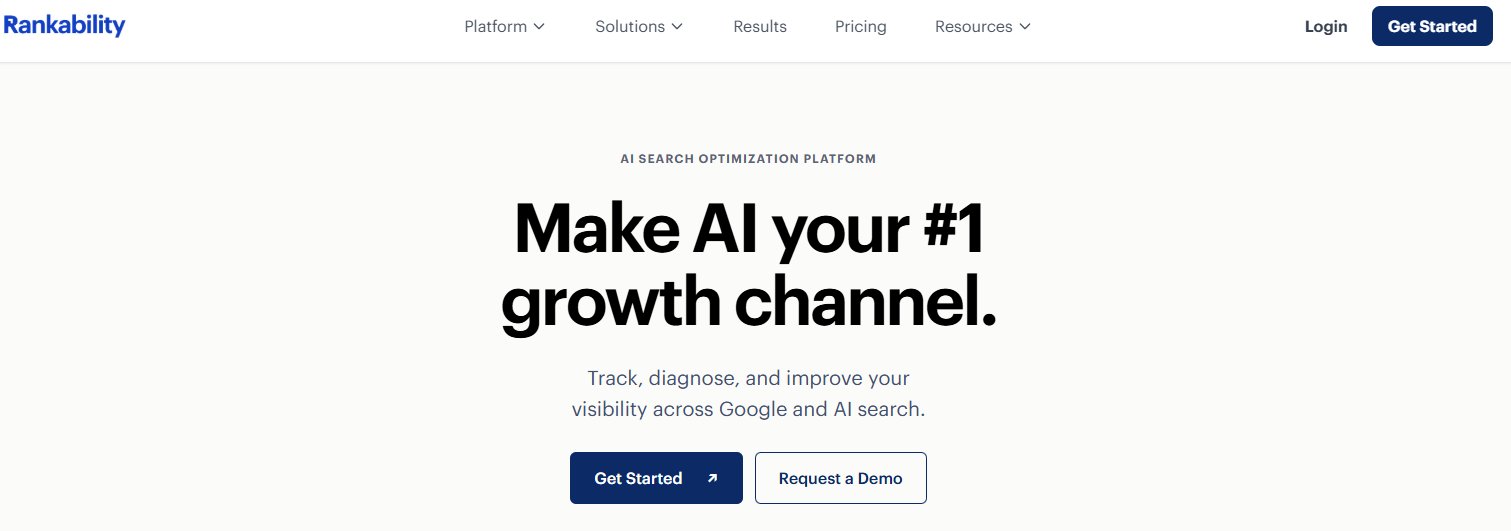
Rankability was designed for agencies from the ground up, blending keyword research, content, rank tracking, AI visibility, and client reporting into a single workflow. Its Reporter tool scans your tracked keywords to surface mentions and citations across several AI platforms.
Because AI visibility here is keyword-configured, it tells you whether a client shows up for the terms you've fed it — not what people are actually prompting or asking. For agencies wanting light AI monitoring bundled with SEO, that's often sufficient.
Good fit for: agencies bundling SEO and AI visibility in one tool.
Worth knowing: no real prompt demand data, and no link between visibility data and content.
- Peec AI
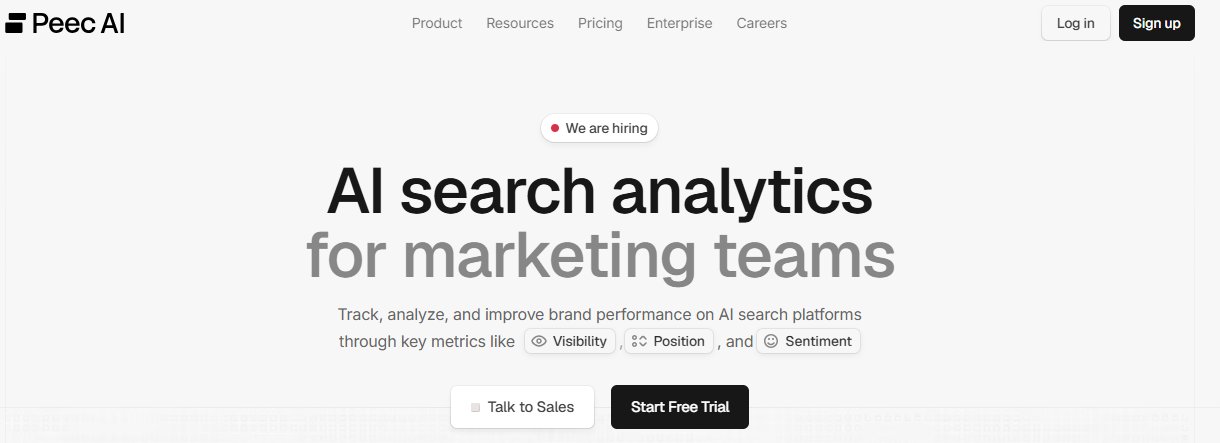
Peec AI is a Berlin-built AI search analytics tool with a genuinely clean, client-friendly interface. It covers visibility, position, and sentiment across major engines, with daily tracking and screenshot audit trails that make reporting easy to trust.
It's a monitor, and stays one — volume signals are clickstream-based rather than pulled from real conversations, and there's no content workflow layer.
Good fit for: agencies wanting a dashboard clients actually enjoy opening.
Worth knowing: monitoring only, with no execution layer attached.
- Semrush AI Toolkit
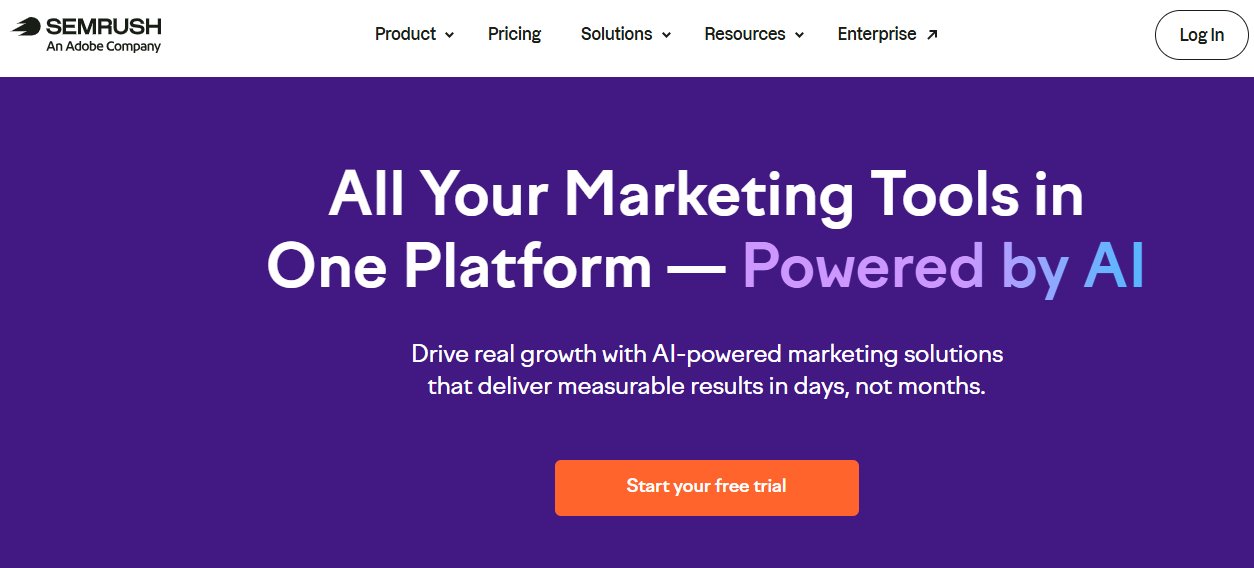
Semrush's AI Toolkit adds share of voice, sentiment, and prompt tracking to a platform many agencies already live in day to day — one login, one invoice, real convenience.
The AI coverage is narrower than the broader SEO suite might suggest: brand performance updates weekly, and several engines aren't covered. There's no AEO-specific content workflow or crawler-level attribution either.
Good fit for: agencies already running SEO inside Semrush.
Worth knowing: a light AI layer, not the backbone of a serious AEO practice.
- Ahrefs Brand Radar
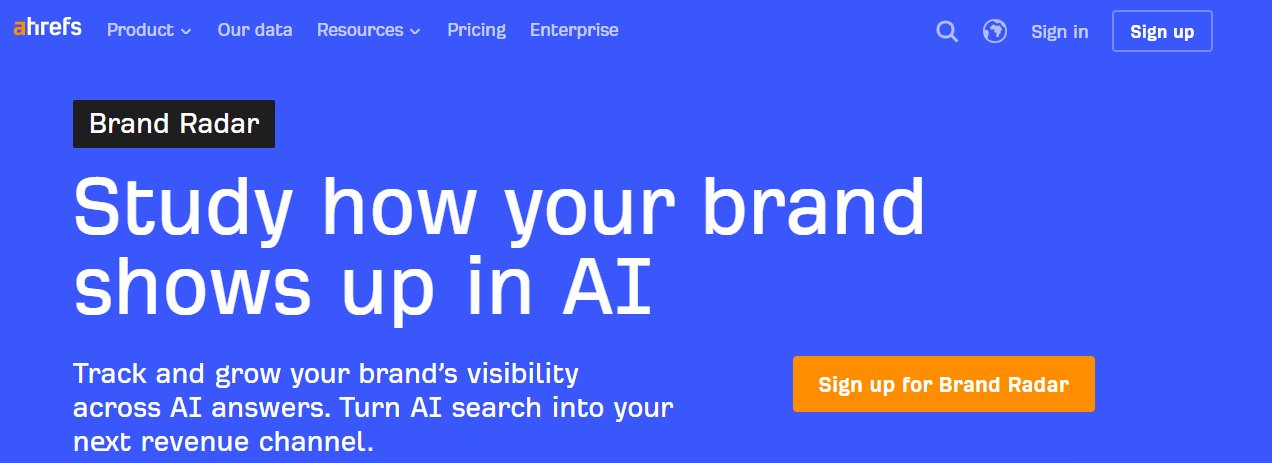
Ahrefs Brand Radar lets agencies already inside Ahrefs monitor AI mentions and citations across AI Overviews, AI Mode, ChatGPT, Perplexity, Gemini, and Copilot. Custom Prompts track exact buyer questions daily, and the AI Visibility Index maps brands across hundreds of millions of prompts.
Ahrefs pulls many of its prompts from its own keyword database and People Also Ask data, and is upfront that these are modeled signals rather than performance data. For directional monitoring inside a tool you already trust, it does the job.
Good fit for: agencies bridging SEO and early AI visibility work.
Worth knowing: keyword-derived prompts, no AEO content workflows.
- AirOps
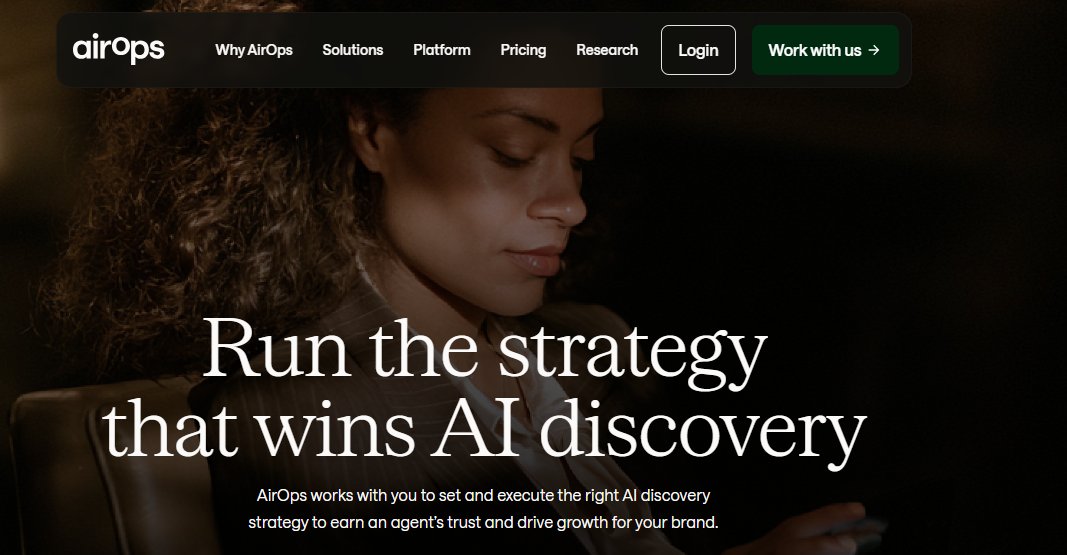
AirOps started life as a content automation platform and added AI visibility later, so content throughput is where it genuinely shines. Grid runs workflows across hundreds of client URLs simultaneously, and Power Agents turn recurring jobs into reusable templates.
The tradeoffs are a steep learning curve, output that generally needs editing, and shallower monitoring than dedicated visibility tools. It suits technical teams whose bottleneck is producing content, not measuring it.
Good fit for: agencies with engineering resources scaling content across many URLs.
Worth knowing: narrow engine coverage and output that needs cleanup.
- Writesonic
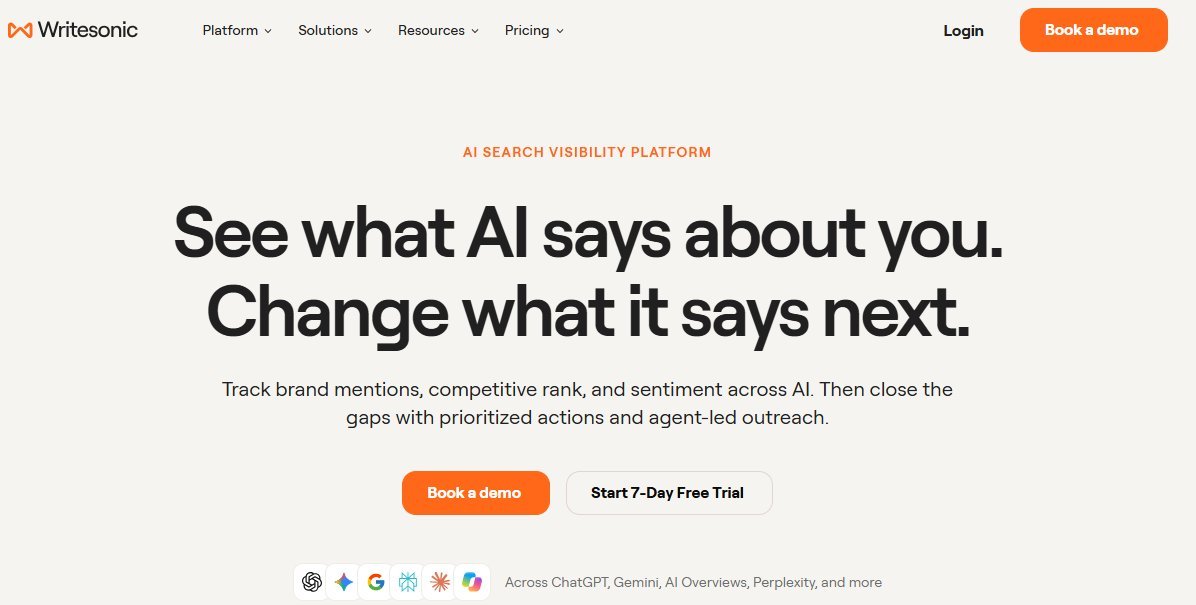
Writesonic built its name in AI writing and has since repositioned toward AI visibility. Speed is the pitch — an article writer that handles research, internal linking, and FAQ generation across many client accounts at once.
Its content methodology is SEO-first with AEO layered on top, and the monitoring and content sides of the product don't really talk to each other. Quality can slip when you push for volume.
Good fit for: agencies whose main constraint is content output.
Worth knowing: no loop between monitoring and content, and methodology isn't clearly disclosed.
- Conductor
Conductor is an established enterprise SEO platform that's expanded into AI visibility, with an intelligence dashboard covering mentions, citations, and sentiment, plus coverage across more than 160 countries. For enterprise agencies already on Conductor, the AI layer is a reasonable bolt-on.
Prompts here are synthetic and keyword-derived, data collection is API-first, and updates land only a couple of times a week rather than daily.
Good fit for: enterprise agencies already using Conductor for SEO.
Worth knowing: an AI layer on top of SEO infrastructure, not a purpose-built AEO tool.
- BrightEdge
BrightEdge is a long-running enterprise SEO platform positioning itself as a combined SEO-and-AEO play. Its real strength is entity work — structuring content so answer engines recognize a brand and its place in the knowledge graph, with mentions and citations tracked across ChatGPT, Google AI Overviews, and Perplexity.
Prompt suggestions are synthesized from SEO keyword data, so the entity-first approach never quite captures what people are actually asking AI.
Good fit for: agencies serving entity-heavy enterprise clients.
Worth knowing: the AI features trail the maturity of the core SEO tooling.
- Bluefish
Bluefish comes at AI visibility from the brand-safety angle, with persona-based insights and reputation monitoring built to protect client brands. It tracks major engines and measures how closely AI-cited content actually matches what AI is saying.
Clients can't freely customize tracked prompts, citation data stops at frequency rather than going deeper, and there's no content generation. It's also an early-stage company.
Good fit for: agencies whose clients care most about reputation.
Worth knowing: limited prompt control, no content workflows.
- Evertune
Evertune is built around brand monitoring and sentiment, backed by a large consumer panel that feeds an AI Brand Index and word-association reports — the kind of output that's easy to hand to reputation-sensitive clients.
It clusters prompts into broad topics rather than tracking demand at the prompt level, and it's monitoring-first, leaving content actions to be handled through partners.
Good fit for: agencies tracking brand accuracy and reputation risk.
Worth knowing: topic-level clustering rather than prompt-level demand.
- Adobe LLM Optimizer
Adobe's AEO entry lives inside Experience Cloud, with visibility tracking, an opportunities dashboard, and attribution reporting. For agencies whose clients already run on Adobe, the consolidation is the whole appeal.
AI visibility is one product line among many here, not the core focus, and prompt data is modeled from clickstream and search-panel data rather than captured from real AI conversations. Content help is limited to a fixed set of fixes.
Good fit for: agencies whose clients run on Adobe Experience Cloud.
Worth knowing: modeled prompt data and limited content options.
- SE Visible
SE Visible is SE Ranking's standalone AI visibility product, tracking brand mentions, citations, and sentiment across the major engines. It draws on SE Ranking's broader AI Search Toolkit, including source data and cached AI answers, and every pricing tier supports multiple brands at a low entry point.
Feature depth is the tradeoff — there's no generative content workflow and a thinner set of integrations, so fast-growing agencies may outgrow it.
Good fit for: budget-conscious agencies wanting SEO and AEO in one ecosystem.
Worth knowing: a newer product with coverage still filling in.
- AIclicks
AIclicks tracks brand mentions across more than 10 platforms via real user interfaces, and its recommendations tab converts visibility data into a prioritized action list spanning content, source outreach, and community. Its partner directory runs on recurring revenue share.
One thing worth weighing: AIclicks also runs its own AI SEO agency service, meaning you'd be buying tooling from a company that also competes with the service you sell. Analytics run shallower than dedicated platforms.
Good fit for: agencies wanting done-for-you content and outreach at scale.
Worth knowing: a competing in-house agency service and lighter analytics.
- Brandlight
Brandlight is an enterprise AI visibility platform built around source attribution — identifying the publishers and pages most responsible for shaping what AI says about a client. That turns directly into a targeting list for earned media and outreach, alongside AEO automation for FAQs and snippets.
It's one of the newer names on this list, built more for enterprise brands than as an agency-partner play, with a correspondingly short track record.
Good fit for: enterprise-leaning agencies focused on who's shaping AI answers.
Worth knowing: newest platform here, enterprise-oriented rather than agency-first.
- Nightwatch
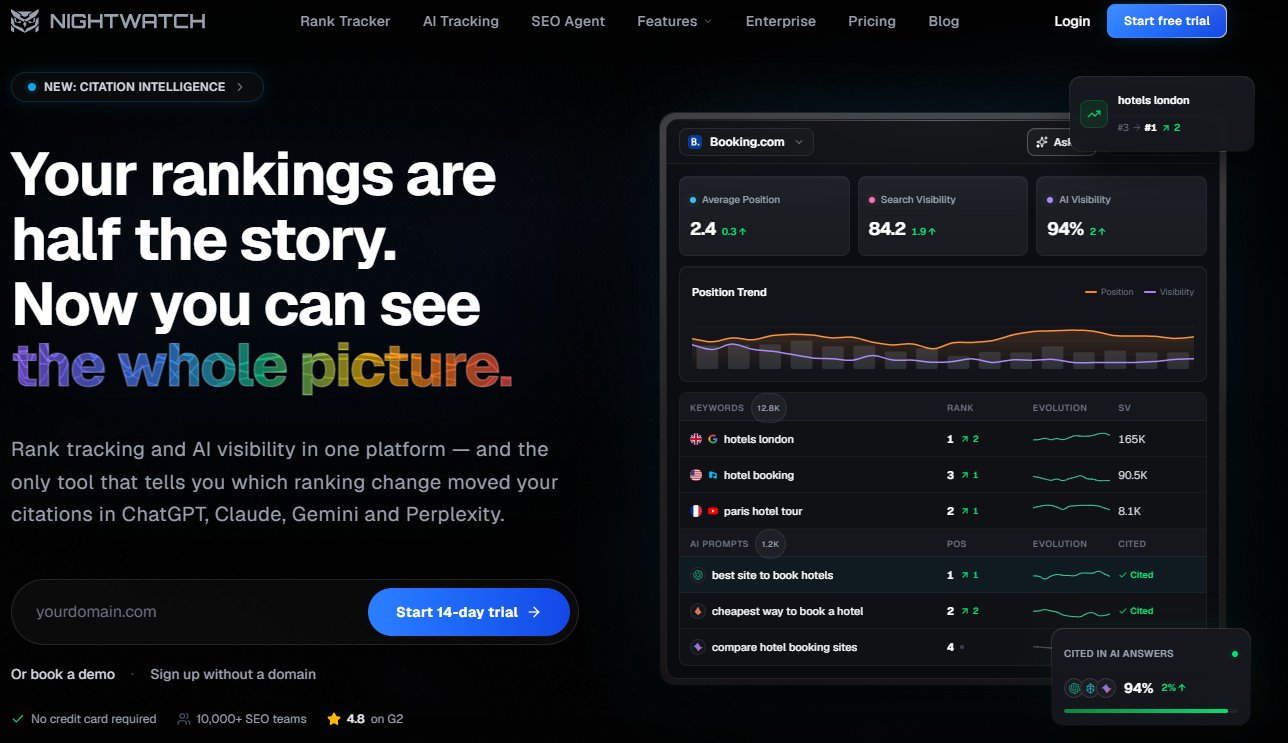
Nightwatch started as a rank-tracking platform and expanded into AI search visibility, letting agencies watch brand presence across AI answers alongside traditional keyword rankings and geographic tracking. For teams already relying on granular rank data, keeping AI visibility in the same view simplifies reporting.
Its roots are in rank tracking, so its AEO depth and citation-level analysis run lighter than tools built for answer engines from day one. It suits agencies that want AI visibility layered onto existing rank workflows rather than run as a standalone practice.
Good fit for: agencies wanting AI visibility alongside detailed rank tracking.
Worth knowing: lighter AEO depth than purpose-built platforms.
How to Choose the Right Tool for Your Agency

The right choice depends on how your agency operates, not on which tool has the longest feature list. Smaller and growing agencies should weight flat pricing, white-label reporting, and multi-brand workspaces heavily. Enterprise-facing agencies with formal procurement will care more about SSO, SLAs, and attribution depth.
A quick way to frame the decision:
- Starting an AEO practice — go with a flat-priced, AEO-native tool that includes white-label reports, so margin stays healthy and setup stays fast. AEOVisor's Agency plan fits here at $79/month for 10 brands.
- Bundling with existing SEO work — if your team already lives in Semrush or Ahrefs, their AI add-ons keep everything under one login, at the cost of depth.
- Serving enterprise clients — Profound, Conductor, and BrightEdge bring procurement-friendly features and deeper attribution, at a correspondingly higher price.
The mistake to avoid: buying on engine count alone. A tool that tracks ten engines but can't produce a client-ready report or a ranked list of fixes still leaves you doing the hard part manually. Prioritize the tools that carry you all the way from measurement to action to proof.
Frequently Asked Questions
How do agencies prove AEO ROI to clients?
Agencies prove AEO ROI by tracking Share of Voice over time, showing prompt win/loss against competitors, and tying AI visibility gains to referral traffic and pipeline. Because AI answers often produce no click, the strongest approach combines a trended visibility score with citation data and any crawler or GA4 signals you can capture. A branded monthly report that charts month-over-month improvement is usually what renews the retainer.
How many AI engines should an agency track?
Track the engines your clients' buyers actually use, starting with ChatGPT, Gemini, and Perplexity as the baseline. Adding Claude and DeepSeek gives fuller coverage, since a brand can dominate one engine and be invisible in another. Tools that cap at four or five engines leave blind spots, so confirm coverage before you commit.
Which AI visibility tools offer white-label reports for agencies?
Several tools support white-label reporting, including AEOVisor, which puts your agency logo, colors, and contact details on client-ready PDF reports on its Agency plan. White-label output matters because it turns raw data into a deliverable clients can forward to their board, which is the difference between a screenshot and a recurring billable line item. Always confirm whether white-label is included in the base price or gated behind a higher tier.
Does an agency need a dedicated AEO tool or is an SEO platform enough?
For serious AI visibility work, a dedicated AEO tool gives you broader engine coverage, real answer-engine data, and citation-level insight that SEO add-ons usually lack. SEO suites like Semrush and Ahrefs are convenient if your team already uses them, but they treat AI as an add-on with narrower coverage and keyword-derived prompts. Many agencies run both: an SEO platform for rankings and backlinks, and a purpose-built AEO tool for answer engines.
What is the most affordable AI visibility tool for agencies?
Flat-priced, AEO-native tools tend to be the most affordable for agencies managing multiple brands. AEOVisor's Agency plan is $79 a month flat for 10 brand trackers across 6 engines with white-label reports and no per-seat fees, and it offers a free plan to test first. Always compare total cost, since per-brand or per-seat pricing on other tools can climb quickly as your client roster grows.
Check Your Clients' AI Visibility Today
Ready to see where your clients actually stand in AI answers? Run any domain through AEOVisor's free AI Visibility Score checker to get a 0 to 100 score in about 30 seconds, spot the gaps sending buyers to competitors, and walk into your next pitch with real data on screen. No account or credit card required.